
Racial Justice Statement
This statement is an open invitation to our congregation and friends to join our ongoing conversation about racial inequity in our community, nation, and world. It is a springboard for both discussion and action. We consider this a living document that will naturally change and grow with us. Every one of us—adults, teens, and children—has gifts to bring to the table. Let’s begin together.
Dear friends, let’s love each other, because love is from God, and everyone who loves is born from God and knows God. We love because God first loved us.
—1 JOHN 4: 7 (CEB)
We Believe and Confess
As members of Second Presbyterian Church, Nashville, Tennessee, we believe in God, who loves us and creates all human beings as equal, and who calls every race and gender to live together as one.
We believe in Jesus Christ, who calls us to follow his teachings, respond with love, and act to correct injustices.
We believe in the Holy Spirit that inspires us to work with others for justice, freedom, and peace.
We believe in the grace from God that is given to us when we work continually toward fulfilling God!s vision of a just and right world.
We confess that we have not fully embraced our fellow human beings as our neighbors, that we often keep the veil of injustice over our eyes to avoid seeing the truth.
We participate in systems and structures that benefit white people but are denied to our fellow human beings of color or those who are gay, lesbian, bisexual, transgender, or queer. We acknowledge the church is complicit in the creation of this system.
It is our moral, ethical, and Christian responsibility to follow Jesus!s teachings and seek to right the unbalanced and unfair practices in our society, to speak truth to unjust laws and practices, and to repair the systems that prevent us from achieving a right and just world.
We are called to embrace our diversity and seek to do so without sowing seeds of divisiveness, yet not turn away from conflict or confrontation.
We therefore admit, apologize, and repent for both our intentional and unintentional complicity in a system that privileges one human being over another.
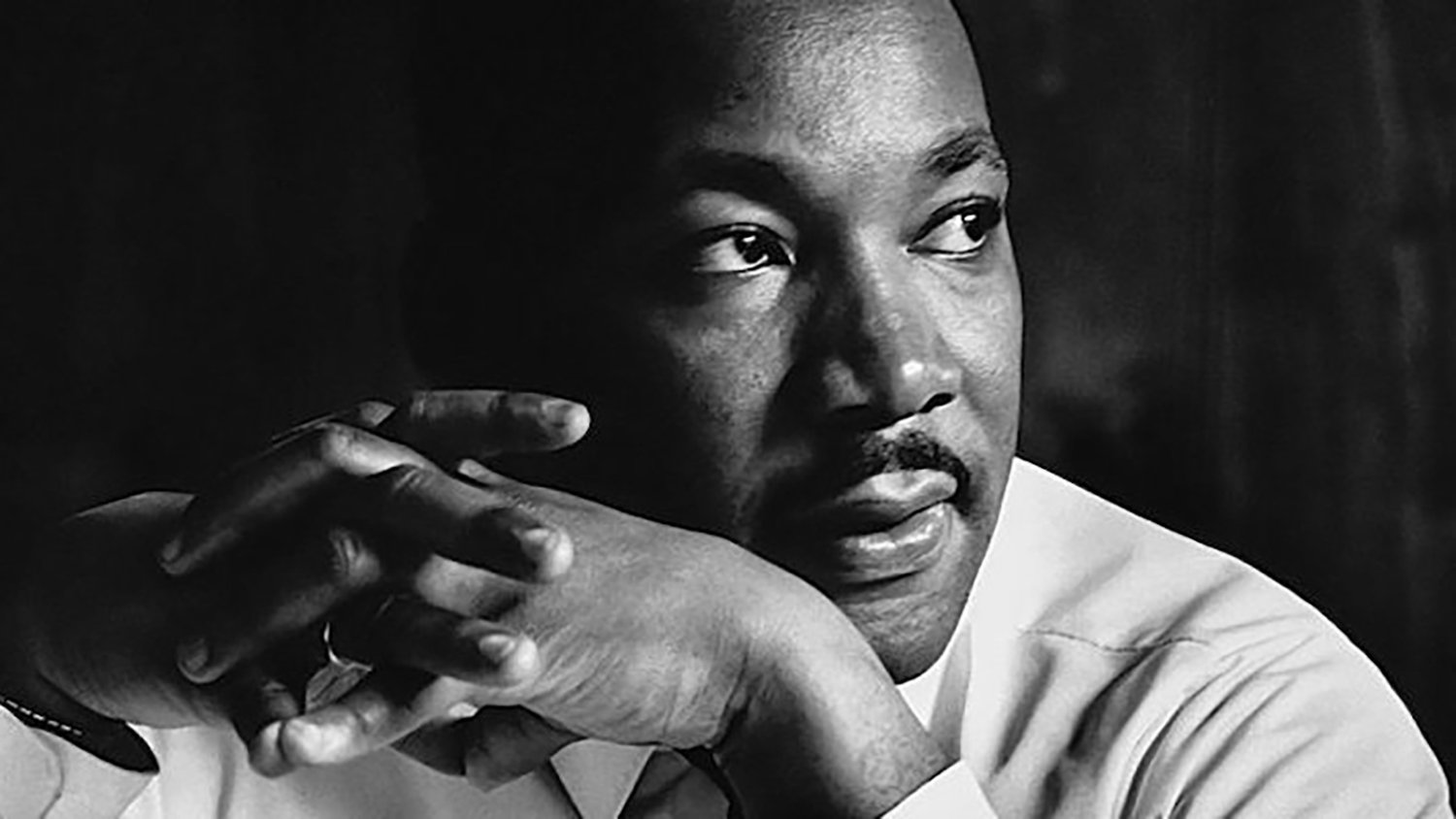
Love is the greatest force in the universe. It is the heartbeat of the moral cosmos. He who loves is a participant in the being of God.
— Rev. Dr. Martin Luther King, Jr.
We resolve
The members and friends of Second Presbyterian Church are committed to creating a church--and city and nation--that is antiracist. With God!s help, we will undertake, over the coming months and years:
• To continue our self-education and awakening to racial injustice;
• To pray and take to heart the call to work toward God’s kingdom;
• To forge alliances with and volunteer for Black-run community organizations, doing the work they feel is needed;
• To open ourselves to relationships with people of color through meals, Bible study, inter-church participation, and community activities;
• To encourage and find ways the church organization and congregants can support Black-owned businesses;
• To be more intentional in offering the use of our church property to community groups of color;
• To actively participate as citizens in the democratic process to support equal justice under the law;
• To peacefully and publicly demonstrate our beliefs;
• To make strategic financial contributions in the Black community by way of atonement.

We face our history
Davidson County Will Book 13, Page 153 includes an inventory (above) for the estate of Catharine R. Lapsley, the wife of the Rev. Robert A. Lapsley, the first minister of Second Presbyterian Church. Seven enslaved people are recorded in this document as her property.
Courtesy of the Metro Nashville Archives
Catharine & the Rev. Robert A. Lapsley
Catherine R. Lapsley, the wife of the Rev. Robert A. Lapsley, the first minister of Second Presbyterian Church, owned seven enslaved people, according to the Nashville Enslaved and Free People of Color Database. It was not unusual for women in the pre-emancipation South to own enslaved people.
The database cites Catharine Lapsley’s “estate inventory,” which is on Page 153 of Davidson County Will Book 13 (photo above). The inventory includes:
1 Negro man named Alfred 1 Negro woman named Martha and her two children, Allen and Andrew 2 Negro women, Sally and Peggy 1 Negro girl named Cassandra
The Will Book entry is dated Jan. 30, 1845. Catharine Rutherford Lapsley died the previous year and is buried in Mount Olivet Cemetery. Rev. Lapsley is listed as the executor of his wife’s estate.
Information in the database is based on thousands of documents, like the Will Book entry from 1845, that show ownership of enslaved people in Davidson County. While no such document is recorded in the database for Rev. Lapsley, he is known to have owned enslaved people.
As one could expect of a white-controlled congregation born in the slave South, slavery and race were part of Second Presbyterian’s DNA from its outset.
Second was first conceived in 1841 as a Sunday School launched by some “young and enthusiastic” members of what was then the Nashville Presbyterian Church, which stood on the site that is now Downtown Presbyterian Church. The leaders in this effort were prominent merchants, most of them slaveholders.
The Sunday School was elevated to a congregation of the Nashville Presbytery in 1843, with 36 charter members, building its first sanctuary on the corner of Gay and College, on a lot donated by hardware merchant and slaveholder James Erwin. The first Session was likewise dominated by slaveholders, one of whom held with his wife 21 slaves.
Second’s first minister, Robert A. Lapsley, was also a slaveholder. Prior to the Civil War, it was not uncommon for white-controlled churches to have enslaved members, but there is no evidence of that for Second. However, the original sanctuary included a gallery, at a time when it was customary in southern churches to reserve the gallery for slaves.
Slavery was also central to a defining event of Second’s Civil-War-era history. At the. time of Tennessee’s secession in 1861, Second’s pastor, J. S. Hays, was northern-born. Hays was no opponent of slavery himself; indeed he was strongly opposed to abolitionism and the Republican Party. But he was also opposed to secession, and in any case was reluctant to address political issues from the pulpit. That stance put him afoul of most of his Session (all slaveholders), which expected him to pray for Confederate victory, and demanded he step down.
The congregation split over the demand; while Hays bowed to the demand, the split continued, such that on the eve of the Union occupation of Nashville in February 1862, a prayer meeting saw each half of the congregation refusing to pray for the other side. Once the occupation was in place, the pro-Union dissidents, led by two northern-born merchants (one a slaveholder), convinced the occupation authorities to seize the books, records, communion plate, and building from the pro-Confederate majority of the Session. The building was then used as a chapel for Union soldiers, and Second became part of the northern (Old School) Presbyterian church, as did what remained of the Presbytery of Nashville.
The northern church sought to reestablish its presence in the South, using Second and the northern-affiliated Presbytery as a beachhead, but the effort proved a failure; in 1870 the Presbytery held only two churches, Second and a Black congregation in Columbia, and Second had only 102 members. Second was returned to the control of the southern church in 1871.
Neither side appears to have been motivated by opposition to slavery, although the two Unionist leaders, Daniel D. Dickey and Hezekiah Scovel, entered Republican politics after the war, and the efforts of the northern church to use Second in its attempt to penetrate the South immediately after the war suggest that the congregation may have been briefly “progressive” by southern white standards before its reversion to southern control.
Treasurer’s records from the 1860s indicate that the congregation included leading Republicans, including the “carpetbagger” Mayor A. E. Agnew; the editor of the principal Republican newspaper S. C. Mercer; General John Eaton, who had worked with “contrabands” under Ulysses Grant and then became State Superintendent of Education under Republican William G. Brownlow; and other Republican office holders and prominent local unionists.
Second’s pastor from 1864 to 1867, R. H. Allen, later became a prominent advocate for missions to the freedmen in the northern church, although there is no evidence of such interest during his pastorate in Nashville. His successor, W. W. Campbell, had ties to the early Fisk University, helping found a union church for the students; Fisk briefly rented a pew at Second, though one suspects mainly to accommodate white faculty. Campbell also preached at the funeral of Joseph McKee, a pioneer founder of freedmen’s schools in Nashville who was attached to a different presbyterian denomination, the United Presbyterian Church.
All told, though, Second’s unionism was less interested in helping the freedmen than in opposing sectional division; after 1871 there is little evidence to indicate that Second deviated from White southern orthodoxy on racial issues prior to the past half century.
In the wake of the Civil Rights movement, under the leadership of Pastor Joseph Holder, some members, including youth, sought to reach out to people of color living nearby in the then transitional neighborhood of Waverly-Belmont, inviting them to attend Second and participate in its youth group. Blacks proved uninterested in attending Second, though; furthermore, those efforts proved controversial among white members and were soon abandoned. An initiative of Pastor Thomas Borland in the 1980s to exchange pulpits with an African-American congregation likewise faded with time.
Although today’s congregation welcomes people of all races, prides itself on being open to the cultural and theological riches of the African-American Christian tradition, and engages in interracial cooperation on matters of community concern, it remains substantially White.
Only “in the capacity of servants”


Restrictive covenant, above, recorded Feb. 5, 1926, contained in Book 662, Pages 807-808, courtesy of the Nashville Davidson County Register of Deeds Office
Originally, the land where the church stands and the house where our office is located was part of the Noel’s Subdivision of Watkins Grove. A restrictive covenant was recorded by the Davidson County Register of Deeds Office on Feb. 5, 1926 that was signed by Oscar and John Noel, trustees of numerous acres, including the house and the future site of the church. Other landowners in the area also signed it.
The landowners agreed to abide by the covenant, including language that forbade anyone “of African descent” from owning, leasing, or living on any of designated property except “in the capacity of servants.” Such covenants became illegal and unenforceable in 1968, when Congress passed the Fair Housing Act. Racially restrictive covenants such as this one were not uncommon and were found across the United States.
We become aware
For a number of decades, the people of Second Presbyterian Church have embraced an expanding theology—one in which our understanding of God’s love has given us a deeper commitment to working toward justice: equal rights for women; full inclusion as a
More Light church for LGBTQ+ persons; hospitality and participation for people with disabilities; fair treatment of immigrants; respect for people of other faith traditions; care for the earth. Our experience of the past few years has brought to the forefront the sin of classifying our brothers and sisters of color as "other” and molding our social, legal, and cultural systems around that concept.
Together, we have begun learning. Through pastoral leadership, congregational reading studies, racial challenge and trauma workshops, and group storytelling sessions, we have learned. We will continue to educate ourselves even as we confront our own weaknesses.
We fully acknowledge the wrongdoings of our church forebears and understand that we are the beneficiaries of the profits from our historical past. In the words of Reverend Kelly Brown Douglas,* we have had a "400-year head start.”
We acknowledge our privilege. This privilege multiplied over the years in the form of property wealth, educational advantage, and undisguised racism. It was perpetuated by Jim Crow laws and legalized forms of racism that continue into our lifetimes in the form of an unjust legal system, discriminatory policing, inequitable employment practices, unfair healthcare policies, biased banking and lending methods, educational disparity, and many other practices that are built into our national culture.
Even those among us who grew up at an economic disadvantage or who remain financially challenged have come to understand our societal advantage in a dominant white culture. We do not wake up each morning and wonder what kind of race-based unfairness or judgment we will face that day. We assume our acceptance and our full agency without question.
We therefore admit, apologize, and repent for both our intentional and unintentional complicity in a system that privileges one human being over another.
We Believe the Bible Calls Us To Practice Justice
